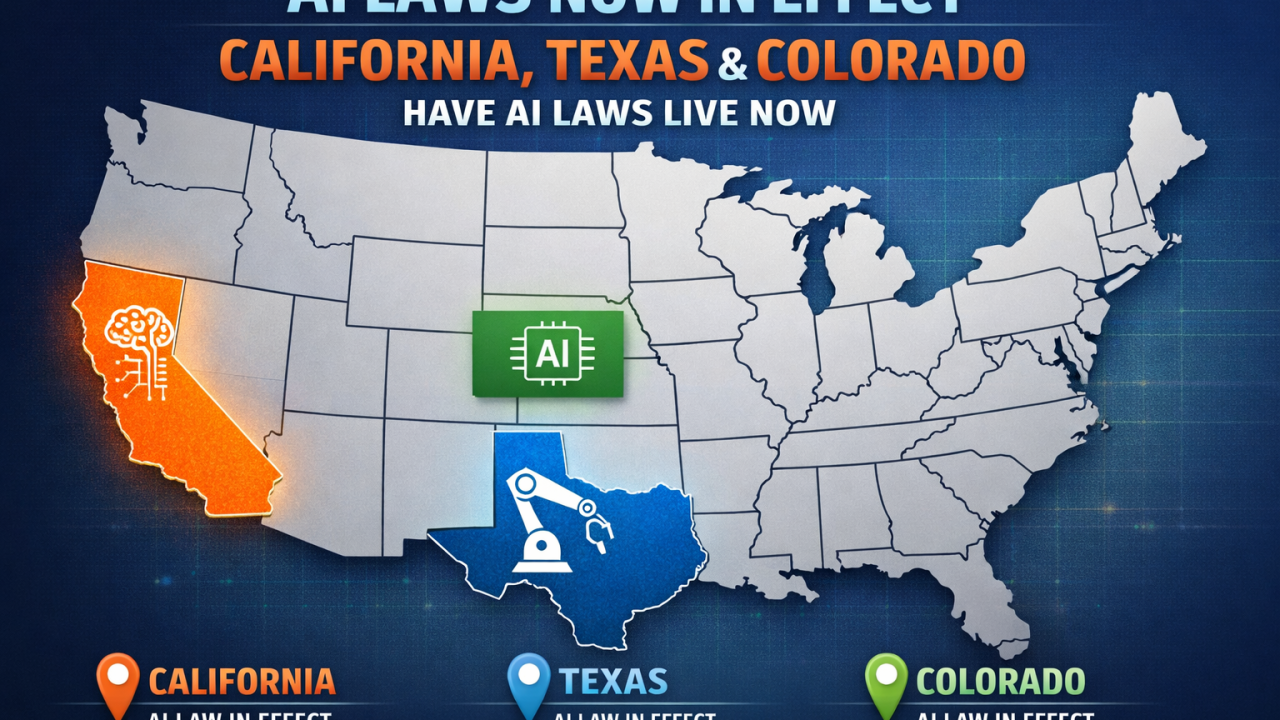
Two states have now enacted comprehensive AI governance laws targeting the private sector use of AI in consequential decisions. Texas TRAIGA went into effect January 1, 2026. The Colorado Artificial Intelligence Act — SB 24-205 — goes into effect June 30, 2026. For businesses operating in either state, understanding both laws is no longer optional.
This article compares the two laws directly — what they require, how they differ, and what the practical compliance implications are for businesses operating under one or both frameworks.
The Core Similarities
Both laws share the same fundamental premise: businesses that deploy AI systems in decisions that materially affect consumers have legal obligations to document, oversee, and be accountable for how those systems work.
Both laws apply to deployers — businesses using AI-powered platforms — not just the developers who build them. Both laws contemplate reasonable care as the compliance standard for smaller businesses. Both laws require consumer disclosures when AI is used in consequential decisions. Both laws contemplate human oversight of AI-assisted decisions. And both laws were designed with the understanding that the plaintiff bar and state attorneys general would be the primary enforcement mechanism.
The similarities are not accidental. Colorado's law was drafted with awareness of emerging AI governance frameworks, and TRAIGA followed similar principles. Businesses that build a solid compliance posture for one law will find that much of the work transfers to the other.
Effective Dates
TRAIGA — In effect since January 1, 2026. Already enforceable. The Texas Attorney General has authority to pursue violations that have occurred since that date.
Colorado AI Act — Originally scheduled for February 1, 2026, the effective date was delayed by the Colorado legislature to June 30, 2026 following a special session in August 2025. Colorado businesses have until June 30th to achieve compliance. That window is closing.
The practical implication for multi-state businesses: Texas compliance is not optional and has not been optional since January. Colorado compliance needs to be in place before June 30th. A business that waits until June to address Colorado is taking an unnecessary risk given the amount of time and documentation involved in building a complete compliance record.
Enforcement Authority
TRAIGA — Enforced by the Texas Attorney General. The maximum penalty is $200,000 per violation. The law's language around private rights of action has some ambiguity that legal scholars continue to analyze — there is a reasonable argument that individuals affected by non-compliant AI deployments may have a direct cause of action, though this has not yet been tested in Texas courts.
Colorado AI Act — Enforced exclusively by the Colorado Attorney General. The law explicitly does not create a private right of action — only the AG can bring enforcement actions. However, before pursuing enforcement, the AG must provide notice of violations and allow a 60-day cure period. This cure period is a meaningful distinction from TRAIGA — Colorado businesses that are notified of a violation have 60 days to remediate before formal enforcement begins.
The cure period makes Colorado's enforcement posture somewhat more forgiving in theory. In practice, the businesses most likely to benefit from the cure period are those that already have the infrastructure to remediate quickly — which means businesses that have already begun building compliance records.
The Safe Harbor Difference
This is one of the most significant practical differences between the two laws.
TRAIGA provides an explicit affirmative defense for businesses that have aligned their AI governance with the NIST AI Risk Management Framework 1.0. The NIST AI RMF is a federal framework published by the National Institute of Standards and Technology that provides a structured approach to identifying, assessing, and managing AI risk. A Texas business that can demonstrate NIST AI RMF alignment has the strongest possible TRAIGA safe harbor position.
The Colorado AI Act does not designate a single framework as an explicit safe harbor. Instead, it contemplates that deployers demonstrate reasonable care through a risk management policy and program that identifies, documents, and mitigates known or reasonably foreseeable risks of algorithmic discrimination. There is no Colorado equivalent of TRAIGA's NIST RMF safe harbor.
The practical implication: a business that builds NIST AI RMF aligned documentation for TRAIGA compliance has created a strong foundation for Colorado AI Act compliance as well, even though the Colorado law does not explicitly reference NIST. The documentation overlaps significantly.
Bias Audit Requirements
TRAIGA does not explicitly require annual bias audits. It requires reasonable care in managing AI risk, which includes assessing and mitigating known risks of discrimination. Documentation of bias assessment efforts is strongly recommended but not mandated in the specific annual audit format.
Colorado AI Act is more explicit. The law requires deployers to conduct impact assessments for high-risk AI systems. These impact assessments must evaluate the system's known and reasonably foreseeable risks of algorithmic discrimination, document the data used to train the system where available, and describe the system's intended uses and known limitations. The frequency and specific format of impact assessments under the Colorado law continues to be refined through AG rulemaking.
Consumer Disclosure Requirements
Both laws require consumer disclosures when AI is used in consequential decisions. The specifics differ.
TRAIGA requires disclosure to individuals when AI is used in decisions that affect their legal rights, economic situation, or access to services. The disclosure must be clear and accessible — buried fine print in a terms of service document is unlikely to satisfy the requirement.
Colorado AI Act requires deployers to notify consumers when a high-risk AI system is used to make a consequential decision affecting them. The law additionally requires that consumers be provided a process to appeal or contest AI-assisted decisions and to request human review of those decisions. This appeal and human review requirement is more specific than TRAIGA's disclosure obligation.
Vendor Documentation Obligations
Both laws place documentation obligations on deployers regarding their AI vendors.
TRAIGA requires deployers to take reasonable steps to understand the AI systems their vendors use. The mechanism for this is formal written requests to vendors asking for their AI governance documentation.
Colorado AI Act is more explicit — it requires that developers of high-risk AI systems make documentation available to deployers. This creates a reciprocal obligation: developers must provide documentation and deployers must obtain it. In theory, Colorado deployers have a stronger legal basis for compelling vendor documentation than Texas deployers, because the law creates a developer obligation to provide it.
In practice, many vendors are not yet producing TRAIGA or Colorado AI Act specific documentation. The compliance posture for deployers in both states is similar: send formal requests, document responses, note non-response, maintain the record.
Multi-State Business Strategy
For businesses operating in both Texas and Colorado, the most efficient approach is to build a unified compliance framework that satisfies both laws simultaneously rather than treating them as separate compliance projects.
The unified framework looks like this: an AI vendor inventory that identifies all AI-powered platforms used across the business. Formal documentation requests sent to each vendor citing both TRAIGA and the Colorado AI Act. A risk management policy that addresses the reasonable care standard of both laws. Consumer disclosures that satisfy both states' requirements. Human oversight protocols documented for consequential decisions in both jurisdictions. A certified, timestamped audit record that demonstrates compliance with both frameworks.
Building this once is far more efficient than building it twice. The documentation work overlaps significantly. The vendor demand letters can cite both laws in a single communication. The human oversight protocols are identical. The primary difference is the impact assessment requirement for Colorado, which requires additional documentation of the specific risks associated with each AI system deployed.
What Comes Next
Both laws remain in active development. Colorado's legislature reconvened in January 2026 with the law's effective date and some of its provisions still under active discussion. A working group has been meeting weekly to develop potential amendments or replacement legislation. TRAIGA's implementation is being watched closely by the Texas AG's office.
Businesses that begin compliance documentation now — under whichever law applies to them — will be better positioned regardless of how either law evolves. A compliance record built today demonstrates good faith under any version of the law that emerges.
This article is for informational purposes and does not constitute legal advice. For advice specific to your situation, consult a licensed attorney in the applicable jurisdiction.